

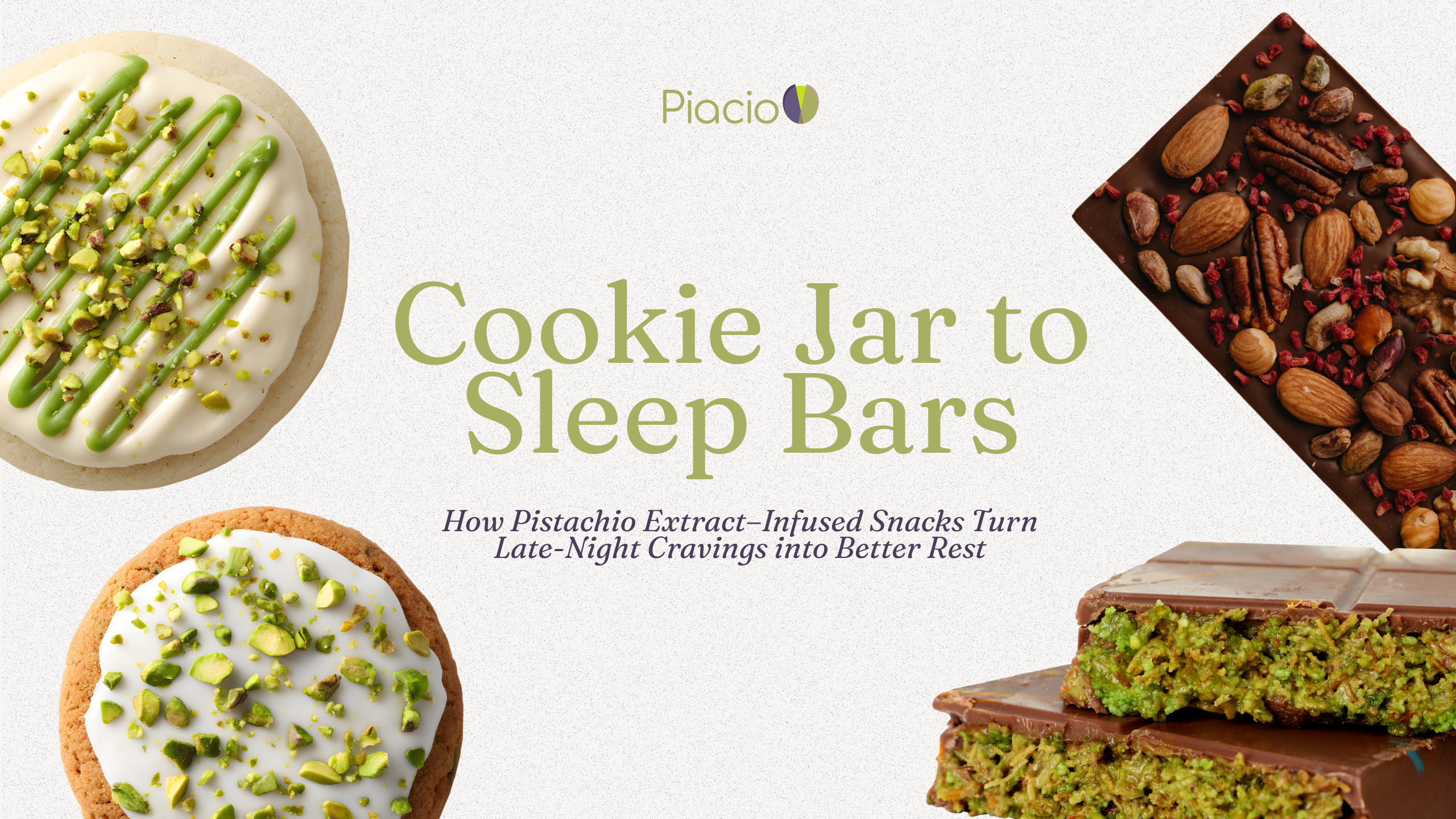
Why Swap Cookies For Pistachio Sleep Snacks
Most bedtime snacks are sugar heavy, ultra processed, and primed to spike blood sugar right before lights out. This late glycemic hit can fragment sleep, worsen next morning hunger, and slowly erode long term metabolic health. Pistachio extract sleep snacks flip that pattern by combining melatonin rich nuts, protein, and fiber into a structured nighttime format.
Formulators can use Piacio® pistachio extract to build cookies, bars, and bites that act like a smarter dessert upgrade. These concepts deliberately target the gut sleep metabolism loop, especially in consumers worried about prediabetes or late night cravings.
What Nighttime Pistachio Data Shows
Emerging human data now looks specifically at pistachios eaten as a nightly snack, not just as a generic daily nut. In adults with prediabetes, a twelve week trial compared pistachios against an isocaloric carbohydrate snack taken at night.
Participants consumed around fifty seven grams of pistachios in the evening and provided stool samples for microbiome sequencing. Compared with the carbohydrate control, pistachios shifted overall microbial diversity and changed several bacterial groups linked to metabolism.
Researchers reported increases in taxa like Roseburia and Lachnospiraceae, both associated with butyrate and healthier gut barrier function. They also observed reductions in bacteria tied to less favorable cardiometabolic markers and breakdown of protective antioxidant compounds. For brands, this gives a clean storyline. Replacing a starchy bedtime snack with pistachio centered options may nudge the microbiome toward a more supportive profile over time.
Gut Microbiome, Sleep, And Metabolism
The gut microbiome interacts tightly with circadian rhythms, glucose regulation, and inflammatory tone across the twenty four hour cycle. Short chain fatty acid producers like Roseburia help fuel colon cells, reinforce barrier integrity, and modulate systemic inflammation.
Poor sleep tends to push people toward higher calorie, refined carbohydrate choices, which can further disrupt the microbiome composition. Conversely, diets richer in fiber, plant compounds, and nuts correlate with better sleep patterns and glycemic stability. Nighttime pistachio snacking sits at that intersection. It blends prebiotic fibers, polyphenols, and fats that bacteria can ferment when the host is asleep and fasting.
Why High Carb Desserts Hurt Nighttime Glycemia
Eating carbohydrate dense desserts near bedtime drives higher and more prolonged glucose excursions during the biological night. Several trials show that the same carbohydrate load produces worse postprandial profiles in the evening versus the morning.
Shift workers represent an extreme version of this problem, often forced to eat substantial meals at adverse circadian times. Even in healthy adults, late carbohydrate intake tends to produce dampened but extended blood glucose responses compared with daytime meals. That pattern matters for formulating sleep snacks. A high sugar cookie can keep glucose elevated into the early sleep window, nudging more awakenings and sympathetic activation.
How Nuts Influence Night Glucose
Nuts combine protein, unsaturated fats, and fiber, slowing gastric emptying and moderating postprandial glycemia. Clinical work suggests nut-containing meals can blunt glucose and insulin spikes compared with macronutrient matched control snacks.
A nighttime clinical trial is currently testing nut rich snacks versus cheese and cracker controls with equivalent macronutrients.
The aim is to assess whether nuts can reduce nocturnal glucose and insulin responses after a high carbohydrate meal.
Even before full nocturnal data, nut enriched meals have shown reduced glycemic responses and beneficial second meal effects. Translating this to bedtime products, pistachio based snacks likely perform better metabolically than simple carbohydrate desserts.
Pistachios As A Natural Melatonin Source
Pistachios stand out among plant foods for their naturally occurring melatonin content. Analytical work using different methods has reported measurable melatonin levels in both raw and roasted pistachios.
One industry supported analysis suggested hundreds of nanograms of melatonin per gram of American grown pistachios. Other methods have produced lower absolute values, but still confirm pistachios as a melatonin containing food.
Alongside melatonin, pistachios supply tryptophan, B vitamins, magnesium, and healthy fats that all support sleep physiology. Broader research shows melatonin intake can improve sleep latency, duration, and quality across several populations.
For formulators, pistachio extract concentrates these bioactives into a standardizable input. That allows consistent melatonin delivering snacks without synthetic hormones or pharmaceutical positioning.

Linking Gut Signals To Sleep Quality
Butyrate and other microbial metabolites do more than nourish colon cells. They also signal through immune, endocrine, and neural pathways that interact with sleep regulation.
Disrupted microbiomes often associate with higher inflammatory markers and poorer subjective sleep metrics in observational work. Meanwhile, dietary patterns that favor microbial diversity and short chain fatty acids tend to align with better sleep outcomes.
Nighttime pistachio intake that increases Roseburia and Lachnospiraceae could therefore support both gut and sleep dimensions simultaneously. Layering pistachio extract into structured snacks lets brands explicitly link that biology to a tangible bedtime routine.
Designing Piacio® Sleep Snack Archetypes
Piacio® pistachio extract gives product developers an anchor ingredient to move beyond generic nut mixes or basic coated kernels. Instead, it supports a family of archetypes that mirror existing dessert habits while upgrading the underlying metabolic profile.
Each practical direction uses Piacio® to deliver melatonin, pistachio phytonutrients, and recognizable pistachio provenance within familiar snack formats.
- Soft baked cookies with Piacio® extract plus whole pistachio pieces and added fiber, positioned as a dessert replacement.
- Chewy pistachio extract bars using oats or legumes for extra prebiotic substrate and sustained release carbohydrates.
- Filled bites or truffles where a Piacio® rich center is wrapped in dark chocolate for indulgent yet purposeful nighttime treats.
All three architectures can target “post dessert” or “instead of dessert” usage occasions. They speak to consumers trying to break late sugar habits without abandoning the ritual of a sweet nightcap.

Using Nighttime Microbiome Data In Positioning
The Penn State led trial on nighttime pistachios gives formulator friendly talking points around microbiome shifts. Key messages can focus on more beneficial bacteria, improved diversity, and the context of prediabetic adults replacing carbohydrate snacks.
Ingredient marketing can highlight that pistachio snacks were consumed nightly, aligning neatly with sleep snack positioning. Compared with abstract microbiome claims, this concrete nighttime use case increases credibility for both brands and practitioners.
When building copy, teams should avoid overstating clinical outcomes, since long term disease endpoints were not the primary focus. Instead, they can emphasize microbiome support, diet quality improvement, and alignment with emerging glycemic timing data.
Framing Glycemia Benefits For Real Consumers
Most consumers will not speak in terms of postprandial excursions or incremental area under the curve. They will recognise practical outcomes like steadier energy, fewer middle of the night wakeups, and less morning sugar crash.
Message frameworks can connect evening carbohydrate heavy desserts with restless sleep and next day hunger spikes. Piacio® based snacks can then be framed as a calmer, more balanced way to satisfy cravings at the end of the day.
Developers might describe product benefits as helping support stable nighttime blood sugar, within the context of a balanced diet. This phrasing stays aligned with data on nut snacks and circadian glycemia timing without implying drug-like effects.
Building Evidence In The Piacio® Pipeline
Brands working with Piacio® can extend the evidence base beyond existing pistachio and nut studies. Simple, pragmatic studies can compare Piacio® enriched cookies against standard sugar cookies in small evening crossover designs.
Endpoints could include continuous glucose monitoring, self reported sleep quality scales, and next morning hunger ratings. Even pilot data provides powerful stories for health professionals, retailers, and ingredient partners reviewing the concept.
Another option is to track microbiome changes in a subset of consumers regularly using Piacio® snacks instead of desserts. Stool sequencing before and after an eight to twelve week switch could echo existing nighttime pistachio findings.
Translating Science Into Shelf Language
Translating complex microbiome and glycemia data into packaging copy requires clarity and restraint. Regulators expect structure function style language and clear separation between general wellness benefits and disease claims.
Some on pack directions that stay close to current evidence include phrases about natural pistachio melatonin supporting nightly wind down. Additional supporting statements can reference balancing evening snacking with nuts, protein, and fiber for smarter nighttime choices.
Digital channels can go deeper, explaining gut bacteria, short chain fatty acids, and sleep glycemia links using consumer friendly visuals. White papers and practitioner briefs can then present the full references and Piacio® specific pilot data for professional audiences.
Piacio® As The Smarter Dessert Swap
Consumers want sleep help that feels natural, snackable, and compatible with their favorite comfort foods. Piacio® powered cookies, bars, and bites let brands show that sleep support can look and taste like dessert, not medicine.
Replacing high sugar, high glycemic desserts with pistachio extract sleep snacks addresses microbiome, melatonin, and glucose together. The science of nighttime pistachio snacking provides a credible backbone for that smarter swap story. Brands ready to upgrade their bedtime portfolios can partner with Piacio® to build next generation sleep snacks their customers actually crave.
To explore Piacio® pistachio extract for your bars, cookies, or functional bites, connect with the Piacio® team and start formulating.
References
Muñoz Jurado, A., et al. (2024). Presence of melatonin in foods of daily consumption. Food Chemistry. https://shorturl.at/JUuw9
Petersen, K. S., et al. (2025). Nighttime pistachio consumption alters stool microbiota diversity in adults with prediabetes. The Journal of Nutrition. https://shorturl.at/VKkuy
Penn State University. (2025). Nighttime pistachio snacking may reshape gut microbiome in prediabetic adults. https://shorturl.at/5L9i6
SciTechDaily. (2025). Eating pistachios at night could transform your gut health. https://shorturl.at/nHyvN
American Pistachio Growers. (2019). Study finds American grown pistachios contain significant amounts of melatonin. https://shorturl.at/Yy0bL
Healthline. (2021). Do pistachios really contain melatonin? https://shorturl.at/szZwo
Palinksy Wade, R. (2025). Foods with melatonin. https://shorturl.at/nqg4K
Zuraikat, F. M., et al. (2021). Sleep and diet: Mounting evidence of a cyclical relationship. Nutrients. https://shorturl.at/n0ECY
A randomized crossover trial assessing time of day snack consumption and glycemic response in adults. (2023). Chronobiology International. https://shorturl.at/B3xBF
Effect of meal timing on postprandial glucose responses to a low glycemic meal. (2019). Clinical Nutrition. https://shorturl.at/ENp2j
Nut intake at night: Effect on postprandial glycaemia. Clinical trial registration. https://shorturl.at/yGO5m
Coates, A. M., et al. (2013). Acute and second meal effects of peanuts on glycaemic response. British Journal of Nutrition. https://shorturl.at/DVpsT
Sleep Foundation. (2025). Healthy bedtime snacks to eat before sleep. https://shorturl.at/u5P8V
Botanic Healthcare. (2024). Natural melatonin from pistachio extract. https://shorturl.at/R5wQq
Longevity Project. (2025). Pistachios for gut health. https://shorturl.at/tGZ0y
Today.com. (2025). Foods with the most melatonin. https://shorturl.at/5tlfj
Lal PathLabs. (2024). Foods that help you sleep better. https://shorturl.at/KUGAq
Leave a Reply