
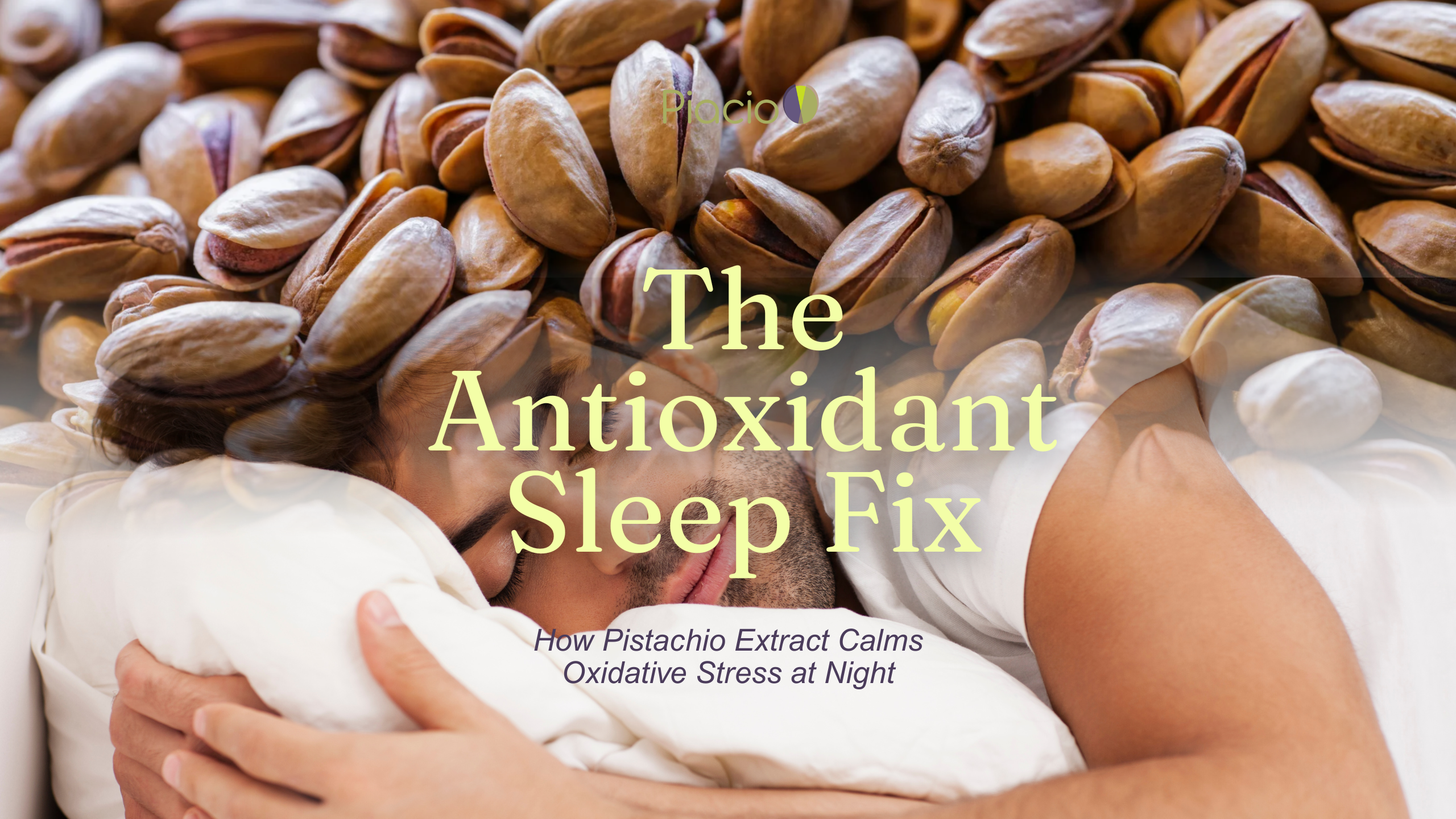
Most sleep supplements focus on melatonin dosing and calming botanicals. However, they often ignore oxidative stress and inflammation that quietly undermine sleep quality. Pistachio extract offers a different angle. It combines naturally occurring melatonin with a dense mix of antioxidants that modulate oxidative damage and inflammatory pathways linked to insomnia.
The Missing Link Between Oxidative Stress and Poor Sleep
Oxidative stress reflects an imbalance between reactive oxygen species and antioxidant defenses. This imbalance damages lipids, proteins, and DNA in neural and peripheral tissues. Insomnia and short sleep duration are now strongly associated with increased oxidative stress biomarkers. These include elevated gamma-glutamyl transferase and reduced antioxidant carriers like albumin and bilirubin.
Recent large scale analyses introduced the oxidative balance score concept. Higher scores, indicating more antioxidant exposure and fewer pro oxidant factors, align with better sleep quality and longer duration. Oxidative stress also interacts with neurotransmitter systems. Reactive species can reduce levels of serotonin and dopamine, both crucial for sleep regulation and mood stability.
Sleep itself acts as a protective process. It helps clear reactive oxygen species that accumulate during wakefulness, especially in metabolically active brain regions. When sleep is chronically disrupted, this clearing cycle breaks. Reactive species accumulate, which further impairs sleep, forming a damaging feedback loop.
How Inflammation Disrupts Sleep Architecture
Inflammation and oxidative stress are tightly linked. Reactive oxygen species activate inflammatory signaling, while inflammatory cytokines increase oxidative burden in turn. Multiple studies now show that higher inflammatory markers correlate with poorer subjective and objective sleep measures. These include higher C reactive protein and elevated white blood cell counts.
Inflammatory mediators can cross the blood brain barrier. Once inside, they disturb neuronal activity and neurotransmitter systems involved in sleep regulation. Microglial activation and neuroinflammatory pathways are increasingly implicated in circadian rhythm disruption. They also contribute to heightened pain perception, which further fragments sleep.
In practice, consumers experiencing chronic low grade inflammation often report unrefreshing sleep. They may also experience frequent night awakenings and non restorative mornings. Targeting inflammatory tone alongside traditional sleep pathways therefore offers a more complete strategy. This is where antioxidants in pistachio extract create unique differentiation.
Antioxidant Profile of Pistachio Extract
Pistachios are unusually rich in several antioxidant classes. These include polyphenols, flavonoids, proanthocyanidins, tocopherols, and carotenoids such as lutein.
Analytical work on Sicilian and Bronte pistachios confirms strong radical scavenging capacity in both kernel and skin extracts. These studies highlight robust performance across multiple in vitro antioxidant assays. Hydrophilic pistachio extracts show pronounced anti-inflammatory effects in macrophage models. They modulate inflammatory mediators and reduce oxidative damage in cell and animal systems. Pistachio polyphenol rich fractions also protect tissues from UV induced oxidative damage. They preserve skin structure and cell morphology under stress conditions.
From a formulation standpoint, pistachio extract delivers a broad antioxidant spectrum. This differs from single molecule antioxidants, supporting multiple overlapping defense pathways. Simulated digestion work indicates high release of pistachio polyphenols in gastric and intestinal phases. This suggests good bioaccessibility for systemic antioxidant effects.
Melatonin in Pistachios: More Than a Sleep Hormone
Pistachios are among the richest plant based melatonin sources currently identified. Reported melatonin levels vary, but consistently exceed most fruits, vegetables, and grains.
Studies using different analytical approaches estimate melatonin contents in the hundreds of nanograms per gram range. Some analyses report much higher values in specific samples. Importantly, roasting does not appear to significantly reduce melatonin in pistachios. This gives formulators flexibility when selecting raw material formats.
Melatonin supports sleep onset and circadian rhythm alignment. However, it also shows antioxidant activity, particularly in mitochondria, and interacts with immune signaling.
Pistachios combine melatonin with phenolics that protect tryptophan from undesirable degradation pathways. This may increase melatonin synthesis and support sleep duration and quality. When delivered as a standardized extract, these mechanisms can be positioned together. This supports both circadian regulation and redox balance for comprehensive sleep support.

Antioxidants, Oxidative Balance Score, and Sleep Outcomes
Recent epidemiological work linked better oxidative balance scores with fewer sleep problems and longer sleep duration.
Oxidative balance scores reflect combined dietary antioxidants, lifestyle factors, and pro oxidant exposures. Higher scores are associated with reduced sleep disorders, less sleep trouble, and improved overall sleep quality. Mediation analyses implicate both oxidative stress markers and inflammatory markers in these relationships. Markers such as gamma glutamyl transferase, albumin, bilirubin, and white blood cells partially mediated these associations. This supports a mechanistic role for oxidative control in sleep regulation. Complementary reviews emphasize a bidirectional relationship between sleep and oxidative stress. Poor sleep increases oxidative burden, while elevated oxidative stress disrupts sleep physiology.
Together, these findings justify antioxidant rich dietary strategies as part of sleep management. Pistachio extract fits this model through its diverse phenolics, carotenoids, and tocopherols.
For brands, positioning pistachio extract within an oxidative balance narrative can differentiate formulations. This aligns with emerging data driven sleep science rather than purely anecdotal claims.
Mechanistic Links: How Pistachio Antioxidants Support Sleep
Antioxidants in pistachio extract can influence sleep through several converging mechanisms. These extend beyond simple melatonin replacement or sedation.
First, pistachio polyphenols neutralize reactive oxygen species and support endogenous antioxidant systems. This may protect neuronal and vascular tissues involved in sleep regulation. Second, pistachio extracts show anti-inflammatory activity in cellular and animal models. They reduce pro-inflammatory mediators that otherwise disturb sleep and increase arousal. Third, by modulating oxidative stress, pistachio antioxidants may support more stable neurotransmitter levels. This includes serotonin and dopamine, which are critical for sleep onset and sleep architecture. Fourth, antioxidant support can improve vascular and endothelial function. Better microcirculation can contribute to more efficient nocturnal recovery across multiple organ systems.
Finally, melatonin within pistachios adds direct chronobiotic effects. It helps coordinate circadian timing signals while contributing additional antioxidant protection in neural tissues. This combined profile positions pistachio extract as a multi pathway sleep ingredient. It addresses redox balance, inflammation, and circadian rhythm within one plant based source.
From Whole Nuts to Standardized Pistachio Extract
Whole pistachios deliver fiber, protein, healthy fats, and bioactives. However, dietary intake levels can be inconsistent and limited by calorie considerations. Extracts allow concentration and standardization of key antioxidant classes and melatonin. This supports predictable dosing in supplements, gummies, and functional beverages.
Research on pistachio polyphenol rich fractions shows strong activity even at relatively low doses. This suggests efficiency advantages for formulated products over whole food alone. Standardized extracts can also minimize variability from cultivar, growing conditions, and processing. This supports consistent label claims and reproducible clinical evaluation.
For B2B buyers, the opportunity lies in linking specification parameters to mechanistic benefits. Standards for total polyphenols, specific flavonoids, and melatonin can underpin credible positioning.
Piacio® pistachio extract is designed with these formulation realities in mind, enabling brands to capture antioxidant and sleep synergies.
Positioning Pistachio Extract Against Conventional Sleep Ingredients
Most sleep formulas rely on melatonin alone, sedative herbs, or amino acids like L theanine and glycine. These address signaling but not necessarily underlying oxidative and inflammatory stress.
Pistachio extract can complement these ingredients rather than compete directly. Its antioxidant profile targets biological noise that blunts the effects of standard sleep actives. Compared with single antioxidant vitamins, pistachio extract offers a more food-like polyphenol matrix. This may better support long term resilience and redox homeostasis. In contrast to sedative botanicals, pistachio extract supports sleep quality without necessarily inducing heavy sedation. This suits consumers wanting restorative sleep without morning grogginess.
The presence of intrinsic melatonin allows dual messaging. Brands can communicate both “natural melatonin source” and “antioxidant support for sleep stressed systems” within one hero ingredient. For premium formulations, pistachio extract can anchor a “sleep plus recovery” platform. This connects night time rest with next day performance and long term health.
Formulation Concepts With Pistachio Extract
Pistachio extract fits multiple delivery formats relevant to modern sleep products. These include capsules, tablets, sachets, functional shots, and bedtime beverages.
Capsule blends can combine pistachio extract with magnesium, L theanine, and low dose additional melatonin if desired. This addresses stress, circadian support, and oxidative burden in one stack. Gummies and chews can leverage pistachio positioning as a “sleep snack.” They can connect nut based heritage with convenient, lifestyle friendly dosing. Bedtime beverages or powdered mixes can highlight pistachio antioxidants alongside adaptogens. These may include ashwagandha or chamomile for relaxation and stress modulation.
From a regulatory and marketing perspective, antioxidant focused claims can complement structure function sleep language. This can include support for oxidative balance, healthy inflammatory response, and overall sleep quality.
Evidence Landscape and Future Directions
Current evidence directly testing pistachio consumption on sleep outcomes is emerging. Clinical trials are underway to compare pistachios against control foods in adults with poor sleep. These trials also explore mechanisms such as melatonin exposure, inflammatory markers, and gut microbiota changes linked to polyphenol intake. Results will inform future claims and positioning. In parallel, mechanistic and observational literature continues to strengthen the oxidative stress sleep connection. This supports antioxidant rich dietary approaches as a rational strategy.
Further work should clarify dose response relationships for pistachio antioxidants. Studies should also examine interactions with other sleep nutrients and different population segments. For brands, early adoption offers a first mover advantage. Integrating pistachio extract now can build recognition ahead of wider category adoption.
Piacio® can support partners by aligning ingredient specifications with the evolving evidence base. This includes guidance on dosage ranges, positioning language, and combination strategies.

Key Takeaways for Sleep Formulators
Oxidative stress and inflammation are now recognized as central players in sleep disruption. They shape both subjective sleep quality and objective sleep architecture. Pistachio extract offers a rich combination of polyphenols, carotenoids, tocopherols, and melatonin. Together, these target redox imbalance, inflammatory tone, and circadian regulation. Instead of focusing on melatonin dosage alone, next generation sleep products can highlight oxidative balance. They can present antioxidants in pistachio extract as a missing link in sleep supplementation.
For B2B buyers, Piacio® pistachio extract provides a differentiated, evidence-aligned path to premium sleep and recovery concepts.
Contact Piacio® to explore custom applications, regional regulatory guidance, and co-developed product concepts.
References
- Davinelli, S., et al. (2024). Sleep and oxidative stress: Current perspectives on the role of oxidative stress in sleep regulation. Nutrients. pmc.ncbi.nlm.nih
- Gentile, C., et al. (2007). Antioxidant activity of Sicilian pistachio (Pistacia vera L. var. Bronte). Food Chemistry. pubmed.ncbi.nlm.nih
- Heyat, M. B. B., et al. (2022). Role of oxidative stress and inflammation in insomnia. Oxidative Medicine and Cellular Longevity. pubmed.ncbi.nlm.nih
- Kumar, A., et al. (2023). Major phytochemicals: Recent advances in health benefits and future perspectives. Frontiers in Pharmacology. pmc.ncbi.nlm.nih
- Lei, X., et al. (2023). Association of oxidative balance score with sleep quality. Journal of Affective Disorders. sciencedirect
- Losso, J. N., et al. (2019). Melatonin and phenolics in pistachios and potential sleep impacts. American Pistachio Growers research summary.
- Nuts for Life. (2024). Can nuts help me sleep? Industry evidence summary. nutsforlife
- Zhang, Q., et al. (2024). Oxidative stress and inflammation mediate the association between oxidative balance score and sleep quality. Frontiers in Nutrition. frontiersin
- Impact of pistachio consumption on sleep. (2025). ClinicalTrials.gov. U.S. National Library of Medicine. NCT07218822. https://clinicaltrials.gov/study/NCT07218822
Leave a Reply